They were convinced something was happening—but they couldn’t prove it.
And that uncertainty began to bother them more than any confirmed wrongdoing ever could.
One day, determined to finally uncover the truth, they decided to follow her.
Not just at the checkpoint—but beyond it.
They let her pass without interruption, pretending it was just another ordinary day.
Then they tracked her.
Carefully. Quietly.
The Discovery
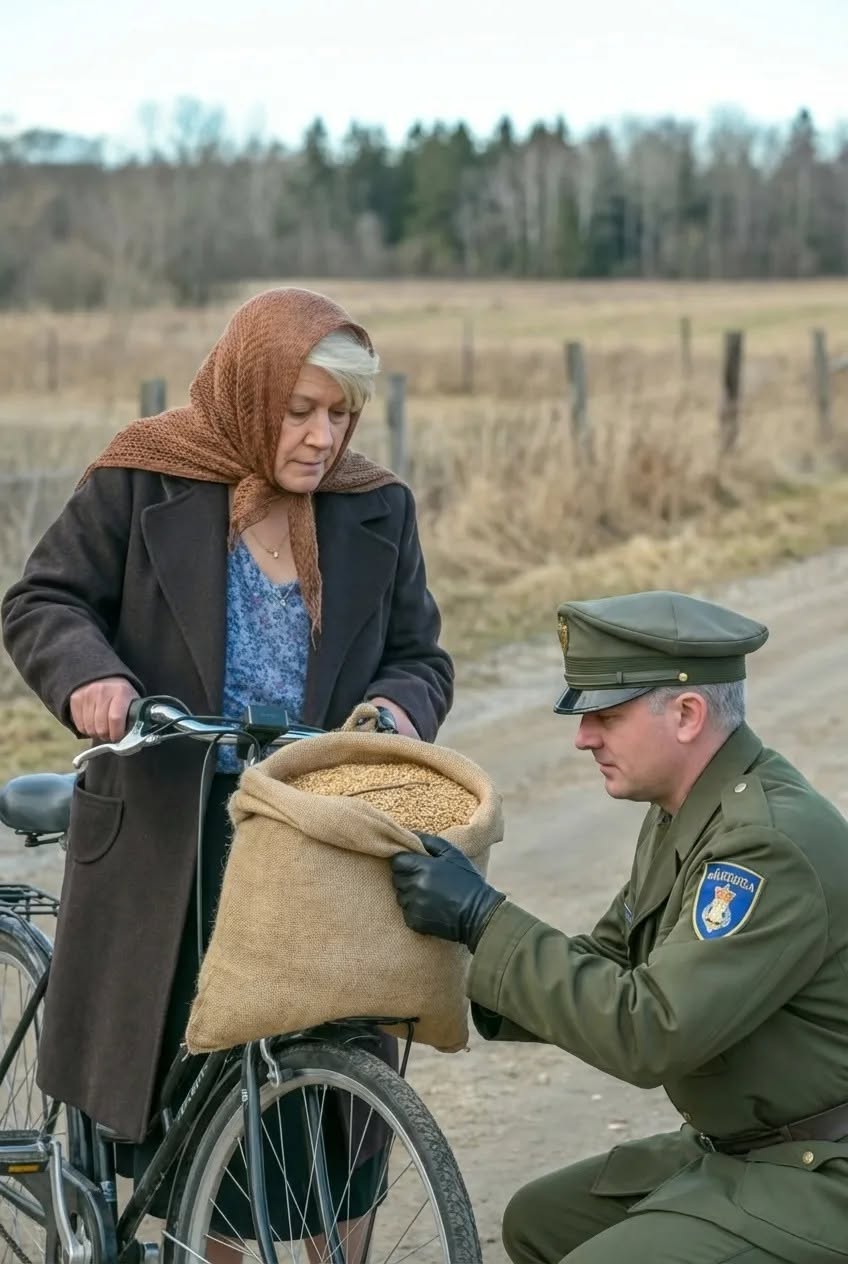
She walked through the town at a steady pace, carrying her sack of sand.
Then, instead of heading to a market or a building, she took a different route—toward a less crowded area.
The guards followed from a distance.
She reached a small storage area near the edge of town.
And then…
She set the sack down.
Walked over to a row of parked bicycles.
And unlocked one.
A brand-new bicycle.
She got on it and rode away—without the sand.
The Realization
It took a moment for the guards to process what they were seeing.
Then it hit them.
The sand was never the point.
It was the distraction.
Every day, while they were focused on inspecting the sand, she was quietly transporting something else entirely.
Not in the bag.
But alongside it.
She had been crossing the border with bicycles.
Brand-new ones.
Day after day.
Right in front of them.
A Lesson in Focus
When the guards finally confronted her, the truth was undeniable.
She hadn’t lied.
She had told them exactly what was in the bag.
Sand.
But she had also relied on something deeper—something far more powerful than deception:
Misdirection.
She gave them something to focus on.
Something harmless, repetitive, and just suspicious enough to hold their attention.
And while they focused on the sand, they overlooked everything else.
Why This Story Matters
At first glance, this might seem like just a clever trick.
But it reveals something profound about human behavior.
We tend to:
Focus on what seems unusual
Overanalyze what we don’t understand
Miss what’s right in front of us
The guards weren’t careless.
They were attentive, diligent, and thorough.
But their attention was directed in the wrong place.
The Psychology of Misdirection
Misdirection works because of how our brains process information.
When something stands out—like a woman carrying sand every day—it captures our attention.
And once our attention is captured, it becomes difficult to shift.
We become:
Fixated
Biased
Less aware of surrounding details
In this case, the sand became the center of the story.
But it was never the real story.
The Bigger Picture
This lesson extends far beyond borders and checkpoints.
In everyday life, we often focus on:
The obvious problem
The loudest issue
The most visible detail
Meanwhile, the real issue may be:
Subtle
Consistent
Hidden in plain sight
Whether in work, relationships, or decision-making, what we choose to focus on shapes what we see—and what we miss.
Final Thoughts
The woman who carried sand across the border didn’t rely on speed, secrecy, or complexity.
She relied on perception.
She understood that if people were busy looking at one thing, they might fail to see another.
And she was right.
In the end, the guards didn’t fail because they weren’t paying attention.
They failed because they were paying attention to the wrong thing.