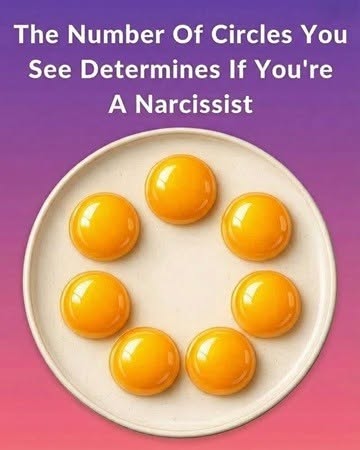
In everyday life, this means that perception can vary significantly between individuals. Two people can witness the same event and remember it differently, not because one is lying, but because their brains prioritized different details. Optical illusions simply make this process visible in a controlled and playful way. They reveal the hidden mechanisms behind perception that usually operate without our awareness.
Ultimately, the true value of this kind of visual puzzle is not in the final number you choose, but in the awareness it creates. It encourages you to slow down, observe more carefully, and question your initial assumptions. It highlights the fact that perception is subjective and that reality, as experienced by the human mind, is always partially constructed.
So when you look at the image again, the goal is not necessarily to find a “correct” answer, but to understand how your mind is interpreting what you see. Whether you count more circles or fewer circles, the interesting part is realizing that someone else may see the same image completely differently. And in that difference lies the true lesson of the illusion: reality is not just what exists in front of us, but also how our brain chooses to understand it.